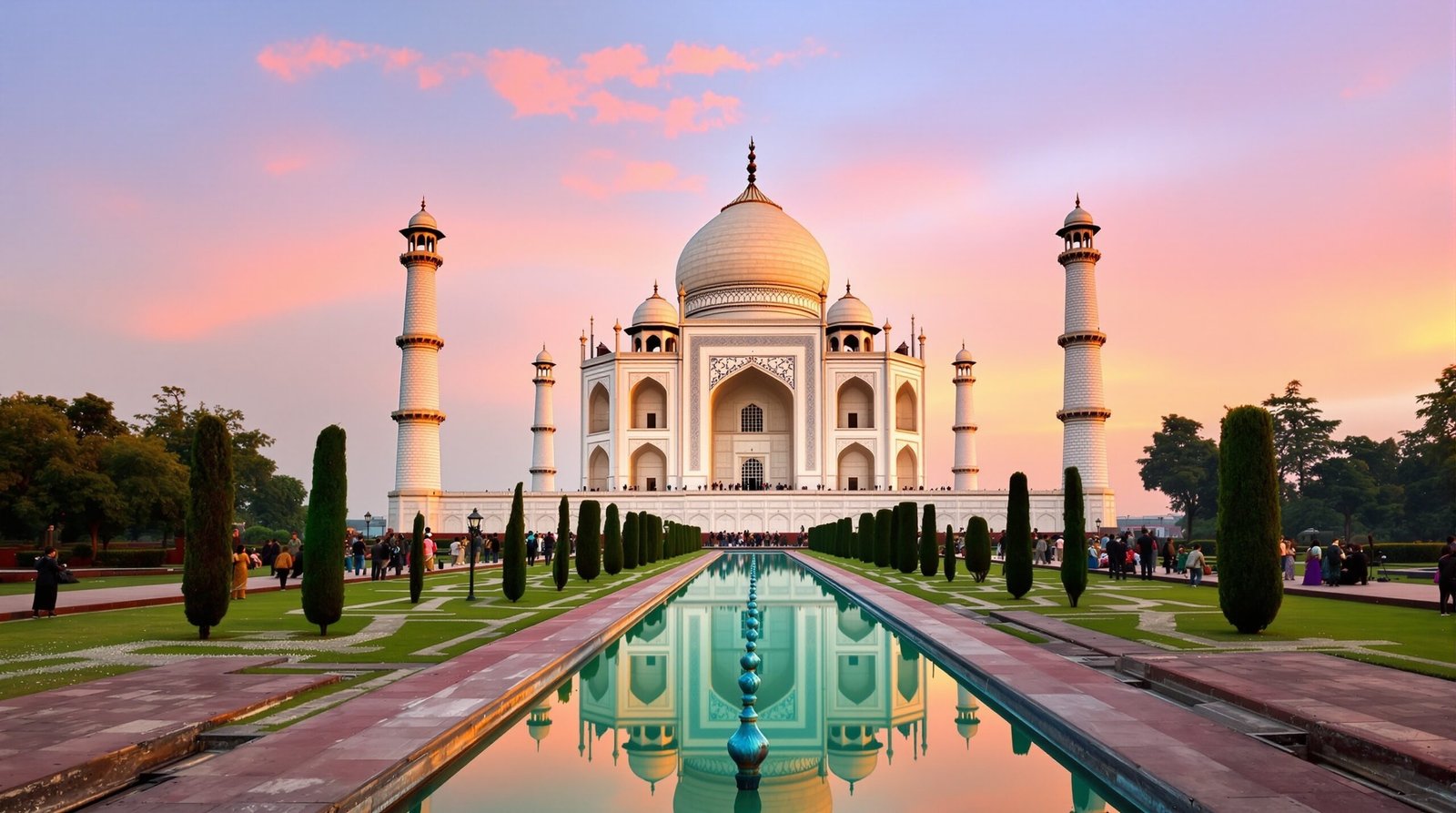
When we stand before the Taj Mahal, time seems to pause. The white marble monument glows with an otherworldly radiance, its perfect proportions creating a harmony that speaks directly to our souls. In recent times, this magnificent mausoleum attracted a staggering 6.9 million visitors, with 6.26 million domestic and 645,000 international tourists making the pilgrimage to Agra to witness this architectural poetry in stone. But what transforms the Taj Mahal from merely a beautiful building into one of the New 7 Wonders of the World—a distinction it earned through a global poll involving 100 million votes?
The answer lies not in a single reason but in a perfect convergence of factors: an immortal love story that continues to move hearts across centuries, architectural brilliance that defies the limitations of its era, engineering marvels that still puzzle modern experts, artistic craftsmanship of unparalleled refinement, and a universal appeal that transcends cultural boundaries. Designated as a UNESCO World Heritage Site in 1983, the Taj Mahal represents what we can achieve when love inspires genius, when resources meet vision, and when craftsmanship approaches perfection.
Let us explore the compelling reasons why this 17th-century monument continues to captivate humanity, drawing millions to its marble terraces and inspiring countless declarations of devotion worldwide.
Reason 1: The Greatest Love Story Ever Told in Stone
At the heart of the Taj Mahal’s wonder lies a love story so profound that it transformed grief into immortal beauty. This isn’t just a monument—it’s a 22-year-long love letter written in white marble, precious stones, and architectural perfection.
The Romance That Changed History
When 15-year-old Prince Khurram (who would become Emperor Shah Jahan) first saw 14-year-old Arjumand Banu Begum at the Meena Bazaar, it was love at first sight. We can imagine that moment—the prince mesmerized by her beauty and intelligence, beginning a courtship that lasted five years before they could marry in 1612. She became Mumtaz Mahal, meaning “Jewel of the Palace,” and truly, she was the jewel of his life.
Their marriage transcended the political alliances typical of royal unions. Historical records reveal that Shah Jahan consulted Mumtaz on state matters, took her advice seriously, and kept her by his side even during military campaigns—highly unusual for the era. They had 14 children together, a testament to their 19 years of companionship.
Grief That Moved an Empire
In 1631, while accompanying Shah Jahan on a military campaign in Burhanpur, Mumtaz Mahal died during childbirth of their 14th child. Historical accounts describe Shah Jahan’s devastating grief: he reportedly didn’t appear in public for a week, and when he finally emerged, his hair had turned white, his back was bent, and his face was aged beyond his 39 years.
In his inconsolable sorrow, Shah Jahan made a promise that would change architectural history: he would build a memorial so magnificent that the world would never forget his beloved. The Taj Mahal would become not just her tomb, but a testament to what we’re capable of creating when love inspires our greatest efforts.
Why This Love Story Makes It a Wonder:
Unlike monuments built for conquest or power, the Taj Mahal was born from the purest human emotion—love and loss. This emotional foundation resonates with everyone who has loved and lost, making the monument universally relatable. We don’t just admire its beauty; we feel the love that created it. As the best travel agency in Delhi, TravelPaa has witnessed countless couples moved to tears before this monument, understanding that true love builds legacies that outlast lifetimes.
Reason 2: Architectural Perfection That Defies Time
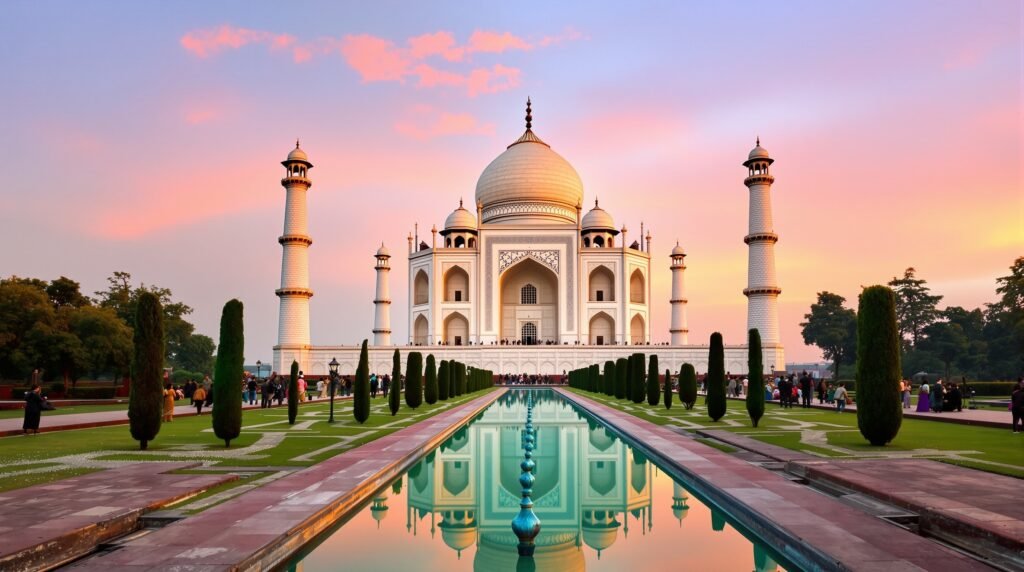
The Taj Mahal represents the pinnacle of Mughal architecture—a harmonious blend of Persian, Islamic, Turkish, and Indian architectural elements that creates something entirely unique and timelessly beautiful.
The Genius of Symmetry
Perfect symmetry defines the Taj Mahal’s design. Every element has a mirror counterpart, creating a visual harmony that our minds find deeply satisfying. The main structure stands on a 6-meter high square plinth with sides measuring 95.5 meters. Four identical minarets—each 40 meters tall—frame the corners, their slight outward tilt an engineering masterpiece designed to fall away from the main structure during earthquakes.
The Mughal garden in front, called a Charbagh, divides into four equal parts by water channels—representing the four rivers of Islamic paradise. The long reflecting pool creates the iconic mirror image photograph we’ve all seen, doubling the monument’s visual impact.
Architectural Fusion Creating Timeless Beauty
Ustad Ahmad Lahouri, the chief architect from Persia, combined:
- Persian influences: The large dome, iwans (arched entrances), and garden layout
- Islamic elements: Calligraphy, geometric patterns, and arabesque decorations
- Turkish features: Double-shell dome construction technique
- Indian craftsmanship: Intricate marble inlay work and jali (latticed screens)
This fusion created something that doesn’t feel foreign anywhere. Whether we’re from India, the Middle East, Europe, or America, the Taj Mahal’s beauty speaks to us in a universal language.
The Magic of Changing Colors
One of the Taj Mahal’s most enchanting qualities is how it transforms throughout the day. The white marble, semi-translucent in quality, responds to light like a living thing:
- Dawn: Pinkish hue with golden highlights
- Midday: Brilliant white against blue sky
- Sunset: Warm amber and orange tones
- Moonlight: Ethereal silvery glow
- Cloudy days: Soft pearl-like luminescence
This color-changing quality makes every visit unique. We can return multiple times and experience a different monument each time—a rare quality that adds to its wonder status.
Why This Architecture Makes It a Wonder:
The Taj Mahal achieves what few buildings manage: perfection without coldness, symmetry without monotony, grandeur without intimidation. Its proportions follow mathematical principles that create unconscious harmony—our eyes and minds find it beautiful without understanding why. This intuitive beauty, combined with technical mastery, elevates it beyond mere architecture into art.
Reason 3: Pietra Dura—The Jeweled Artistry
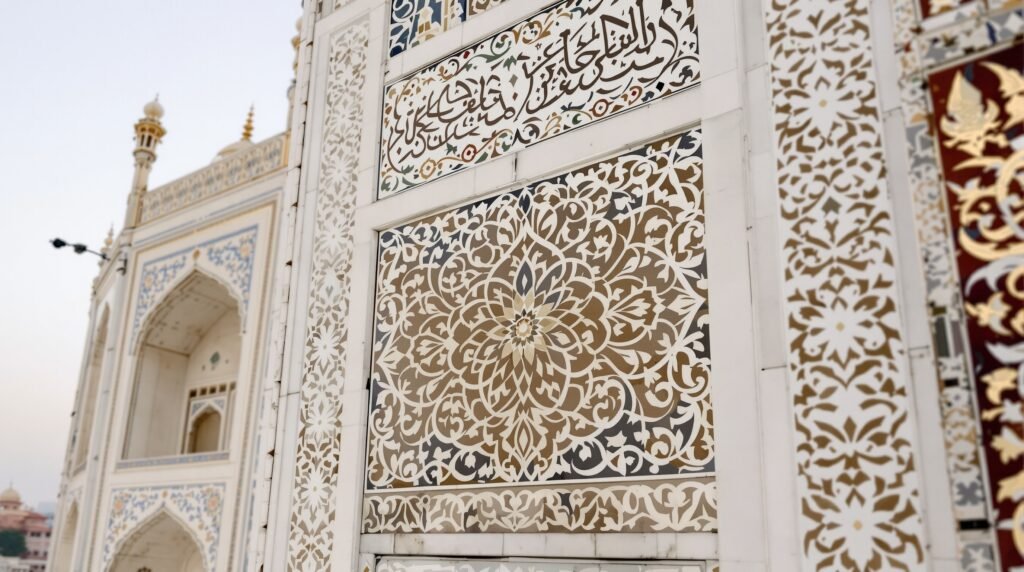
When we examine the Taj Mahal closely, we discover that what appears to be painted decoration is actually an incredibly sophisticated form of marble inlay called pietra dura—perhaps the most refined stone craftsmanship ever achieved.
The Art of Stone Inlay
Pietra dura involves cutting semi-precious and precious stones into thin slices, shaping them precisely, and inlaying them into marble in intricate patterns. The Taj Mahal features more than 28 types of precious and semi-precious stones:
- Lapis lazuli from Afghanistan
- Jade and crystal from China
- Turquoise from Tibet
- Sapphire from Sri Lanka
- Carnelian from Arabia
- Diamonds, emeralds, and corals from various sources
The Craftsmanship That Amazes
Master artisans created:
- Floral patterns so detailed that we can identify specific flowers—tulips, irises, poppies, and daffodils
- Calligraphic inscriptions featuring verses from the Quran, inlaid with black marble
- Geometric patterns with mathematical precision requiring microscopic accuracy
- Border decorations that flow continuously around entire structures
The level of detail is extraordinary. Some flowers feature 35-40 individual stone pieces smaller than grains of rice, each cut and fitted so perfectly that we can’t feel the seams with our fingertips even after nearly 400 years.
Why This Craftsmanship Makes It a Wonder:
This artistry represents thousands of hours of meticulous work by master craftsmen. In our modern age of mass production, we’ve lost appreciation for such dedication to perfection. The Taj Mahal preserves and displays craftsmanship at a level rarely achieved before and never surpassed since. When we see this detail, we’re witnessing human capability at its peak—a reminder of what we can achieve when we refuse to accept “good enough.”
Reason 4: Engineering Marvels That Puzzle Modern Experts
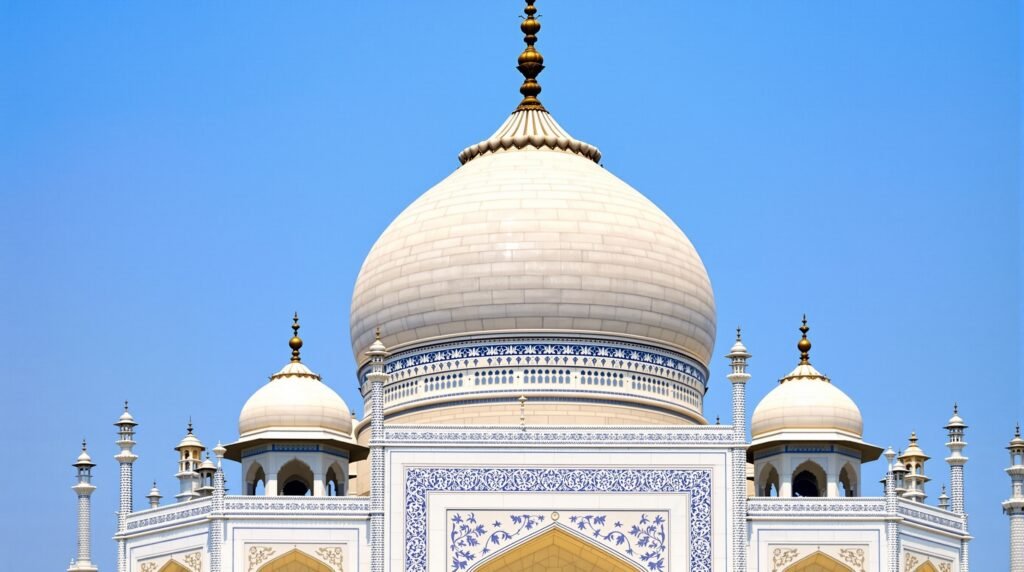
Beyond its beauty, the Taj Mahal showcases engineering solutions that were centuries ahead of their time—innovations that modern engineers still study and admire.
The Double-Shell Dome Innovation
The central dome—rising 35 meters high with a diameter of 18 meters—appears impossibly delicate yet has stood for nearly four centuries. The secret? A double-shell construction technique where:
- The inner dome (visible from inside the main chamber) provides the intimate interior proportions
- The outer dome (visible externally) creates the dramatic exterior profile
- The space between the shells reduces weight while maintaining strength
- The lotus design at the dome’s peak adds to the visual appeal while serving structural purposes
This engineering allowed Shah Jahan’s architects to create the dome’s soaring exterior profile without making the interior feel cavernous or losing the dome’s structural integrity.
The Foundation Mystery
Building a massive marble structure on the banks of the Yamuna River posed significant challenges. The foundation required innovative solutions:
- Well foundation system: Deep wells were dug and filled with stone and mortar
- Timber foundation: Ebony and mahogany logs were used as they strengthen when wet
- Flood protection: The riverside design accounts for seasonal flooding without compromising stability
The fact that no major structural issues have emerged in nearly 400 years—despite being in an earthquake-prone region—testifies to the foundation’s brilliance.
The Earthquake-Resistant Minarets
The four minarets demonstrate sophisticated seismic engineering:
- Each tilts slightly outward by design (not due to settling)
- In an earthquake, they would fall away from the main mausoleum rather than onto it
- This protective design required precise mathematical calculations
This shows that Mughal engineers understood earthquake dynamics centuries before modern seismology developed.
The Acoustic Marvel
The main chamber features remarkable acoustics where a single voice can be heard clearly throughout despite the room’s 24-meter height. The dome’s shape creates an echo that sustains for 28 seconds—perfect for the Quranic recitations performed there. This acoustic engineering was achieved without modern sound technology, using only understanding of geometry and sound physics.
Why This Engineering Makes It a Wonder:
The Taj Mahal proves that calling past civilizations “primitive” is foolishness. The engineering solutions implemented here demonstrate sophisticated understanding of physics, mathematics, materials science, and structural dynamics. That this knowledge was applied not to a bridge or fortress but to a monument of beauty makes it even more remarkable—proof that our ancestors valued both function and aesthetics, engineering and art.
Reason 5: The Scale and Resources of Imperial Vision
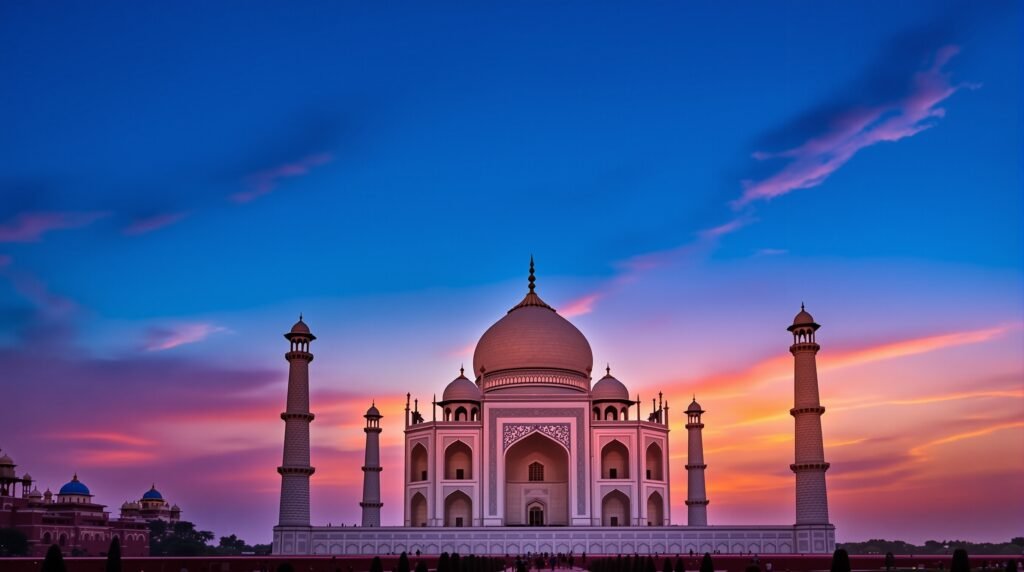
The Taj Mahal’s status as a wonder stems partly from the sheer ambition and resources dedicated to its creation—a scale of commitment that staggers our modern sensibilities.
The Numbers Behind the Monument
The construction statistics read like epic poetry:
- Duration: 22 years (1632-1653), though the main mausoleum was completed around 1643
- Workforce: Approximately 20,000 laborers, artisans, and craftsmen
- Master craftsmen: Over 1,000 elephants transported materials
- Materials: White marble from Makrana, Rajasthan (transported 300 kilometers)
- Cost: Estimated at 32 million rupees (1653 valuation)—equivalent to approximately 70 billion rupees today
Global Resource Mobilization
Building the Taj Mahal required mobilizing resources from across the known world:
- Marble from Rajasthan (India)
- Jade and crystal from China
- Turquoise from Tibet
- Lapis lazuli from Afghanistan
- Sapphires from Sri Lanka
- Carnelian from Arabia
This international sourcing created a monument that literally incorporated the world’s treasures—a global collaboration expressed in stone.
The Human Dedication
Twenty-two years represents more than two decades of focused effort. For perspective:
- Artisans spent their entire careers on this single project
- Multiple generations worked on different phases
- Craftsmen specialized in specific techniques passed down through families
- The dedication required reflects a cultural value we’ve largely lost—the willingness to create something whose completion we might not live to see
Why This Scale Makes It a Wonder:
In our age of quarterly earnings reports and instant gratification, the idea of dedicating 22 years and astronomical resources to a monument of love seems almost incomprehensible. The Taj Mahal reminds us that greatness requires patience, resources, vision, and unwavering commitment. We built it not because it was easy or profitable, but because something inside the human spirit demands we create beauty that outlasts our brief lives.
Reason 6: UNESCO World Heritage Status and Global Recognition
The Taj Mahal’s wonder status isn’t just popular opinion—it has been officially recognized by the world’s most prestigious cultural organizations and through democratic global polls.
UNESCO World Heritage Designation (1983)
UNESCO’s designation recognizes the Taj Mahal as possessing “Outstanding Universal Value.” The criteria for this prestigious status include:
“The Taj Mahal is considered to be the greatest architectural achievement in the whole range of Indo-Islamic architecture. Its recognized architectonic beauty has a rhythmic combination of solids and voids, concave and convex, and light shadow; such as arches and domes further increases the aesthetic aspect.”
This recognition places the Taj Mahal among humanity’s most precious cultural treasures—sites we collectively agree must be preserved for future generations regardless of where we’re from.
The New 7 Wonders of the World (2007)
In one of the largest democratic polls ever conducted, over 100 million people worldwide voted to designate the New 7 Wonders of the World. The Taj Mahal secured its place alongside:
- The Great Wall of China
- Petra in Jordan
- Christ the Redeemer in Brazil
- Machu Picchu in Peru
- Chichén Itzá in Mexico
- The Colosseum in Italy
That the Taj Mahal competed successfully against monuments representing diverse civilizations, time periods, and purposes demonstrates its universal appeal. We didn’t just vote for “our” monument—people worldwide recognized the Taj Mahal’s exceptional status.
Record-Breaking Tourism
Recent statistics reveal the Taj Mahal’s enduring popularity. The monument attracted 6.9 million visitors recently, making it India’s most visited monument and accounting for nearly 12% of all visitors to centrally protected ticketed monuments in the country. These numbers represent more than tourism—they reflect humanity’s continued pilgrimage to experience beauty that transcends ordinary life.
Why This Recognition Makes It a Wonder:
Official designations and visitor numbers provide objective validation of what our hearts already know—the Taj Mahal represents something extraordinary. When UNESCO and 100 million voters agree, when 7 million people annually make the journey to Agra, we’re witnessing collective acknowledgment that this monument deserves its wonder status. It’s not marketing hype; it’s human consensus across cultures, religions, and continents.
Reason 7: Spiritual and Emotional Impact on Visitors
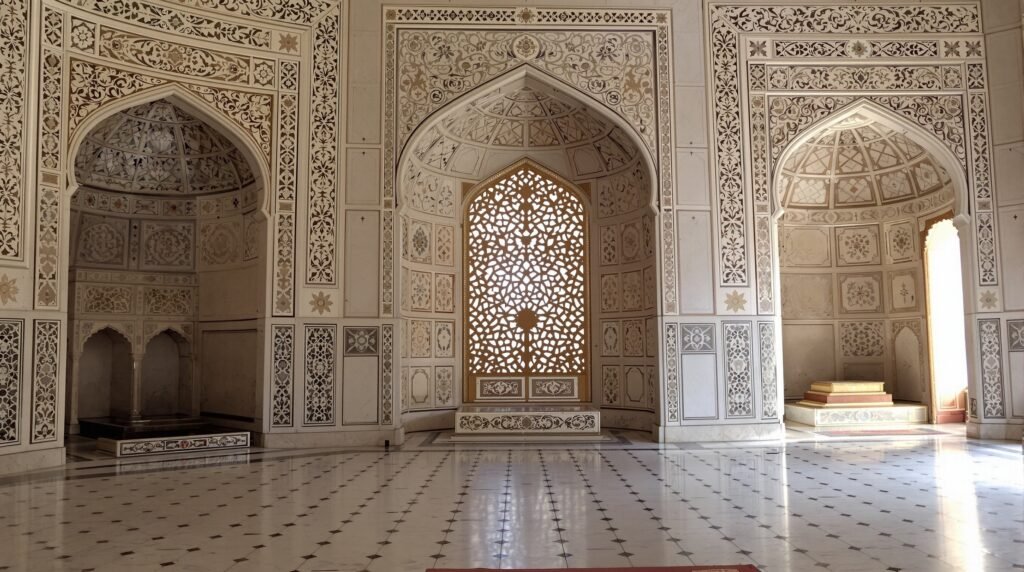
Beyond all technical excellence and historical significance, the Taj Mahal’s true wonder lies in something intangible—how it makes us feel. This emotional impact, reported by millions of visitors across cultures and generations, elevates it from impressive building to genuine wonder.
The Silence That Speaks
Despite receiving thousands of visitors daily, the Taj Mahal maintains an atmosphere of reverence. We find ourselves naturally lowering our voices, moving more slowly, absorbing rather than rushing. This isn’t enforced by guards—it’s a spontaneous response to the monument’s spiritual gravity.
The main chamber, where the cenotaphs of Shah Jahan and Mumtaz Mahal rest (the actual graves lie below), creates a particularly powerful effect. The octagonal marble screen (jali) surrounding the tombs filters light, creating an ethereal glow. Standing there, we feel the weight of 400 years of love, grief, hope, and remembrance.
Universal Emotional Resonance
What makes the Taj Mahal’s emotional impact remarkable is its universality:
- Couples see it as validation that true love exists and inspires greatness
- Artists feel humbled by beauty that sets an almost unachievable standard
- Historians connect with human stories across centuries
- Architects experience awe at what their profession can achieve
- First-time visitors often report unexpected tears—moved by something they can’t articulate
Travel agents like TravelPaa, recognized as the best travel agency in Delhi, consistently observe this phenomenon. Visitors arrive expecting to see a beautiful building; they leave having experienced something that shifts their understanding of what humans can create and what love can inspire.
Transformation Through Beauty
Many visitors report that seeing the Taj Mahal changes them in subtle but lasting ways:
- A renewed appreciation for beauty in daily life
- Inspiration to create something meaningful
- A deepened sense of what love means
- Perspective on what’s worth dedicating our lives to
- Connection to humanity across time and culture
This transformative quality—rare in tourist destinations—justifies the wonder designation more than any architectural measurement ever could.
Why This Emotional Impact Makes It a Wonder:
True wonders don’t just impress our eyes or minds—they touch our souls. The Taj Mahal consistently creates profound emotional experiences across all demographics. Whether we’re Hindu, Muslim, Christian, Buddhist, or secular; whether we’re 8 or 80; whether we’re artists or engineers—the Taj Mahal moves us. This universal emotional resonance, sustained across four centuries and countless millions of visitors, represents perhaps its most wonderful quality.
Planning Your Visit to the Taj Mahal with TravelPaa
Experiencing the Taj Mahal isn’t just about seeing a monument—it’s about creating memories that last a lifetime. As the best travel agency in Delhi with over 44 years of experience since 1981, TravelPaa has perfected the art of Taj Mahal visits, ensuring every aspect of your journey reflects the monument’s magnificence.
Why Choose TravelPaa for Your Taj Mahal Experience
🎉 44+ Years Legacy: Since 1981, we’ve been creating unforgettable Agra experiences
🧑🤝🧑 On-Ground Team Support: Our Agra representatives ensure smooth entry, guiding, and navigation
🗺️ Point Anywhere, TravelPaa Takes You: Beyond the Taj, we show you Agra Fort, Fatehpur Sikri, and hidden gems
🚗 Comfortable Transportation: Luxury vehicles with professional drivers for safe, comfortable journeys
📞 24/7 Customer Support: Immediate assistance if any issues arise during your visit
✅ Quality With Safety: We ensure authentic experiences with verified, excellent guides
Best Time to Visit the Taj Mahal
Optimal Months: October to March offers pleasant weather (15°C to 30°C), avoiding summer’s intense heat (up to 45°C)
Best Times of Day:
- Sunrise Visit: Experience the monument bathed in pink and orange light (opens 6 AM) with fewer crowds
- Sunset Session: Watch the marble transform to warm amber tones (last entry 6:30 PM)
- Full Moon Nights: Special night viewing available (advance booking required—limited capacity)
Day of Week: Visit Tuesday-Thursday to avoid weekend crowds (Taj Mahal closed on Fridays)
Complete Taj Mahal Tour Packages
Same-Day Taj Mahal Tour from Delhi:
- Duration: 12 hours (depart 6 AM, return 6 PM)
- Includes: AC car with driver, Taj Mahal entry tickets, English-speaking guide, lunch at 5-star hotel
- Package Cost: Rs. 4,500 per person (group of 4), Rs. 6,500 per person (private tour)
- Highlights: Taj Mahal, Agra Fort, marble inlay workshop visit
Luxury Taj Mahal Tour (2 Days/1 Night):
- Duration: Overnight in Agra’s finest hotels
- Includes: Both sunrise and sunset Taj visits, Agra Fort, Fatehpur Sikri, accommodation, meals, guide
- Package Cost: Rs. 12,000 per person (4-star), Rs. 18,000 per person (5-star luxury)
- Perfect For: Photographers, romantics, and detailed exploration
Golden Triangle Tour (Delhi-Agra-Jaipur):
- Duration: 6 Days/5 Nights
- Includes: Taj Mahal, Red Fort, Amber Fort, all major monuments, accommodation, transport, meals
- Package Cost: Rs. 35,000 per person (budget), Rs. 55,000 per person (luxury)
- Perfect For: First-time India visitors wanting comprehensive North India experience
Practical Visitor Information
Entry Fees:
- Indian citizens: Rs. 50
- SAARC/BIMSTEC countries: Rs. 540
- Other foreigners: Rs. 1,100
- Children under 15: Free
What to Bring:
- Valid photo ID (passport for foreigners)
- Transparent water bottle (sealed bottles allowed)
- Camera (tripods not permitted)
- Hat and sunscreen for day visits
- Modest clothing (shoulders and knees covered recommended)
What’s Not Allowed:
- Food items (except baby food)
- Tobacco products
- Large bags (lockers available)
- Drones and professional filming equipment without permits
Photography Tips for the Perfect Taj Shot
As countless visitors discover, photographing the Taj Mahal well requires more than just pointing and clicking:
Classic Shots:
- Diana Bench photo: Princess Diana’s iconic pose (arrive early—it gets crowded)
- Reflection pool: Perfect symmetry with the monument mirrored in water
- Through arches: Frame the Taj through entrance gates for dramatic composition
Unique Angles:
- Mehtab Bagh: Across the Yamuna River for sunset silhouettes
- Side perspectives: The monument from different angles shows architectural details
- Detail shots: Close-ups of inlay work, calligraphy, and jali screens
Timing Matters:
- Morning golden hour (6-8 AM): Soft, warm light
- Avoid harsh midday sun (11 AM-3 PM): Creates hard shadows
- Evening golden hour (5-7 PM): Dramatic colors in the marble
Beyond the Taj: Complete Agra Experience
While the Taj Mahal is Agra’s crown jewel, the city offers additional treasures that complete your visit:
Agra Fort (UNESCO World Heritage Site):
- Massive red sandstone fort from where Shah Jahan spent his final years imprisoned, gazing at the Taj Mahal where his beloved was buried
- Contains beautiful palaces, mosques, and the famous Musamman Burj where Shah Jahan died
- Entry Fee: Rs. 50 (Indians), Rs. 650 (foreigners)
Fatehpur Sikri (40 km from Agra):
- Abandoned Mughal city built by Emperor Akbar
- Red sandstone architecture in remarkable preservation
- The Buland Darwaza (Victory Gate) is one of the world’s tallest gateways
- Entry Fee: Rs. 50 (Indians), Rs. 610 (foreigners)
Mehtab Bagh (Moonlight Garden):
- Charbagh complex across the Yamuna River from the Taj Mahal
- Offers the famous “Taj in the distance” photographs
- Sunset viewing spot beloved by photographers
- Entry Fee: Rs. 25 (Indians), Rs. 300 (foreigners)
Shopping in Agra:
- Marble inlay work: Watch artisans practice the same techniques used in the Taj
- Leather goods: Agra is famous for shoes and bags
- Petha: Traditional sweet made from ash gourd—Agra’s signature delicacy
TravelPaa’s comprehensive packages include these attractions, creating a complete Agra experience that puts the Taj Mahal in its historical and cultural context.
The Taj Mahal for Different Traveler Types
For Honeymooners and Couples:
The Taj Mahal is the ultimate romantic destination. Our honeymoon packages include:
- Private sunrise viewing sessions
- Romantic dinner setups at luxury hotels
- Couples spa experiences
- Professional photography sessions
- Candlelight dinners with Taj views
For Families and Children:
Making the Taj Mahal engaging for children requires expertise:
- Child-friendly guides who tell stories rather than recite facts
- Treasure hunt activities teaching about Mughal history
- Age-appropriate explanations of architecture and symbolism
- Comfortable pacing with breaks
For Photography Enthusiasts:
TravelPaa offers specialized photography tours:
- Multiple visits at different times for varied lighting
- Access to less-crowded viewpoints
- Professional photography guides
- Extended time for perfect shots
For History and Architecture Lovers:
Our expert guides provide depth:
- Detailed explanations of architectural elements
- Historical context of the Mughal Empire
- Symbolism in decorative elements
- Comparisons with other Mughal architecture
For Senior Citizens:
We ensure comfortable experiences:
- Battery-operated vehicle transport (included in foreigner tickets)
- Wheelchair accessibility assistance
- Frequent rest breaks
- Slower-paced itineraries
Protecting the Wonder: Conservation Challenges
The Taj Mahal faces significant conservation challenges, and understanding these adds depth to our appreciation:
Environmental Threats:
- Air pollution: Industrial emissions and vehicle exhaust have yellowed the marble
- Acid rain: Corrodes the marble surface gradually
- Yamuna River pollution: Affects the monument’s foundation stability
- Insect infestation: Certain insects leave greenish excrement on marble
Conservation Efforts:
- Regular cleaning with Fuller’s earth (multani mitti) to restore whiteness
- Vehicle restrictions within 500 meters (battery vehicles only)
- Yamuna Action Plan to clean the river
- Scientific studies and restoration projects
- Visitor management to reduce physical wear
Why This Matters:
The Taj Mahal isn’t just India’s treasure—UNESCO designates it as belonging to all humanity. We each bear responsibility for its preservation. When TravelPaa guides visitors to follow rules, avoid touching surfaces unnecessarily, and respect the monument, we’re helping ensure future generations can experience this wonder.
The Taj Mahal in Global Context
Comparing the Taj Mahal to other New 7 Wonders reveals its unique qualities:
Great Wall of China: Military achievement, massive scale, but lacks intimate emotional connection
Petra, Jordan: Carved from cliffs, architecturally impressive, but ancient and partially ruined
Christ the Redeemer, Brazil: Iconic symbol, modern construction, less architectural complexity
Machu Picchu, Peru: Mysterious lost city, archaeological wonder, but purpose remains debated
Chichén Itzá, Mexico: Ancient astronomical achievement, impressive pyramid, lacks personal story
Colosseum, Italy: Engineering marvel, historical significance, but represents violence
What Makes the Taj Mahal Unique:
Among the seven, only the Taj Mahal combines:
- A deeply personal, romantic origin story everyone relates to
- Architectural perfection in its complete, unruined state
- Delicate beauty rather than imposing power
- Craftsmanship at microscopic detail levels
- Universal emotional impact regardless of cultural background
This combination of qualities makes the Taj Mahal arguably the most beloved of the New 7 Wonders—the one that touches hearts as much as it impresses minds.
Conclusion: A Wonder Worth the Journey
The Taj Mahal earns its status among the New 7 Wonders of the World not through a single extraordinary quality but through the perfect convergence of multiple exceptional elements: a love story that transcends time, architectural perfection that approaches the divine, engineering innovations centuries ahead of their era, artistic craftsmanship of unparalleled refinement, imperial resources dedicated to beauty rather than conquest, official recognition from UNESCO and global democratic polls, and an emotional impact that transforms visitors across all demographics.
When we stand before the Taj Mahal, we’re not just seeing a building—we’re experiencing proof that love inspires greatness, that beauty matters as much as utility, that human hands can create perfection, and that some achievements transcend their creators to become humanity’s shared treasure.
In our modern world of shortcuts and compromises, the Taj Mahal reminds us of what’s possible when we refuse to accept “good enough.” It took 22 years, 20,000 workers, resources from across the known world, and unwavering commitment to a vision. The result? Something so beautiful that nearly 400 years later, 7 million people annually make the pilgrimage to witness what love and genius can create together.
Whether you visit as part of a romantic getaway, family vacation, solo journey, or cultural exploration, the Taj Mahal delivers an experience that justifies every superlative ever applied to it. It’s not hype—it’s a wonder in the truest sense.
Your Journey to the Wonder Begins Here
TravelPaa, the best travel agency in Delhi, has been creating unforgettable Taj Mahal experiences for over 44 years. We understand that visiting one of the world’s wonders isn’t just about ticking a box—it’s about creating memories that enhance our understanding of what humanity can achieve.
Our comprehensive packages ensure your Taj Mahal experience matches the monument’s magnificence:
- Expert guides who reveal stories guides miss
- Perfect timing to avoid crowds while capturing ideal photographs
- Comfortable transportation and logistics
- Additional Agra attractions that complete the picture
- 24/7 support ensuring nothing disrupts your experience
🌎 Experience the Wonder with TravelPaa Today 🌎
📞 Call Us: +91 9899921559
📧 Email: holidays@travelpaa.com
🌐 Visit: https://travelpaa.com/
📍 Office: 3rd Floor, Vaishali Enclave, 13, Pitampura, Delhi, 110034
Point anywhere, TravelPaa takes you—and when that point is the Taj Mahal, one of the New 7 Wonders of the World, we ensure your experience matches the monument’s legendary status. Because some journeys aren’t just about reaching a destination; they’re about witnessing what love, vision, and dedication can create when combined with genius.
Visit the Taj Mahal—One of the New 7 Wonders of the World—with TravelPaa, where every detail is planned to match the monument’s magnificence. Because witnessing what love can inspire deserves an experience as perfect as the monument itself. 🕌✨