Introduction: India’s Festival Season Comes Alive
There’s something magical about India between February and April—the air buzzes with anticipation, streets burst into colors, temples echo with devotional chants, and the entire nation celebrates life itself. This period marks one of India’s most vibrant festival seasons, bridging the tail end of winter with the blossoming of spring, bringing communities together in joyous celebration of faith, culture, and tradition.
As the best travel agency in Delhi, TravelPaa has witnessed thousands of travelers—both domestic and international—fall in love with India during this spectacular season. From the spiritual intensity of Maha Shivaratri to the color explosions of Holi, from the devotional fervor of Ram Navami to numerous regional celebrations, this quarter offers unparalleled opportunities to experience India’s soul.
This comprehensive guide covers everything you need to know about Indian festivals from February to April 2026: exact dates, celebration highlights, best places to experience each festival, travel tips, package options, and insights into India’s Top 10 Festivals that define the nation’s cultural identity. Whether you’re planning a spiritual journey, cultural exploration, or simply want to immerse yourself in India’s most colorful celebrations, this guide is your complete companion.
Festival Calendar: February to April 2026 – Key Dates
February 2026 Festivals
| Festival | Date 2026 | Significance | Best Places |
| Vasant Panchami | February 2, Monday | Worship of Goddess Saraswati, beginning of spring | Temples across India, especially in North India |
| Maha Shivaratri | February 15, Sunday | Night of Lord Shiva, most auspicious Shiva festival | Varanasi, Haridwar, Ujjain, Somnath, Rameswaram |
March 2026 Festivals
| Festival | Date 2026 | Significance | Best Places |
| Holika Dahan | March 3, Tuesday | Bonfire night before Holi, burning of evil | Mathura, Vrindavan, Jaipur |
| Holi (Dhulandi) | March 4, Wednesday | Festival of colors, spring celebration | Mathura, Vrindavan, Jaipur, Delhi, Pushkar |
| Ugadi / Gudi Padwa | March 19, Thursday | New Year in Karnataka, Andhra, Maharashtra | Bangalore, Hyderabad, Mumbai, Pune |
| Ramzan Id (Eid) | March 21, Saturday (Tentative) | Islamic festival marking end of Ramadan | Delhi, Lucknow, Hyderabad, Mumbai |
| Ram Navami | March 26, Thursday | Birth of Lord Rama | Ayodhya, Varanasi, Nashik, Sitamarhi |
April 2026 Festivals
| Festival | Date 2026 | Significance | Best Places |
| Hanuman Jayanti | April 1, Wednesday | Birth of Lord Hanuman | Hampi, Delhi (Hanuman Mandir), Varanasi |
| Mahavir Jayanti | March 31, Tuesday | Birth of Lord Mahavira (Jainism) | Palitana, Ranakpur, Shravanabelagola, Kolkata |
| Good Friday | April 10, Friday | Christian observance of Jesus’s crucifixion | Goa, Kerala, Pondicherry, Northeast India |
| Easter Sunday | April 12, Sunday | Resurrection of Jesus Christ | Goa, Kerala, Pondicherry, Shillong |
| Baisakhi | April 14, Tuesday | Punjabi harvest festival & Sikh New Year | Amritsar (Golden Temple), Punjab villages |
| Bihu (Rongali) | Mid-April | Assamese New Year & spring festival | Assam, Northeast India |
Note: Some dates are based on lunar calendar and may vary slightly. TravelPaa will confirm exact dates closer to travel time.
Major Festivals Deep Dive: February to April 2026
1. Maha Shivaratri – The Great Night of Shiva
Date: February 15, 2026 (Sunday)
Muhurat: Nishita Kaal puja (11:55 PM Feb 15 to 12:56 AM Feb 16)
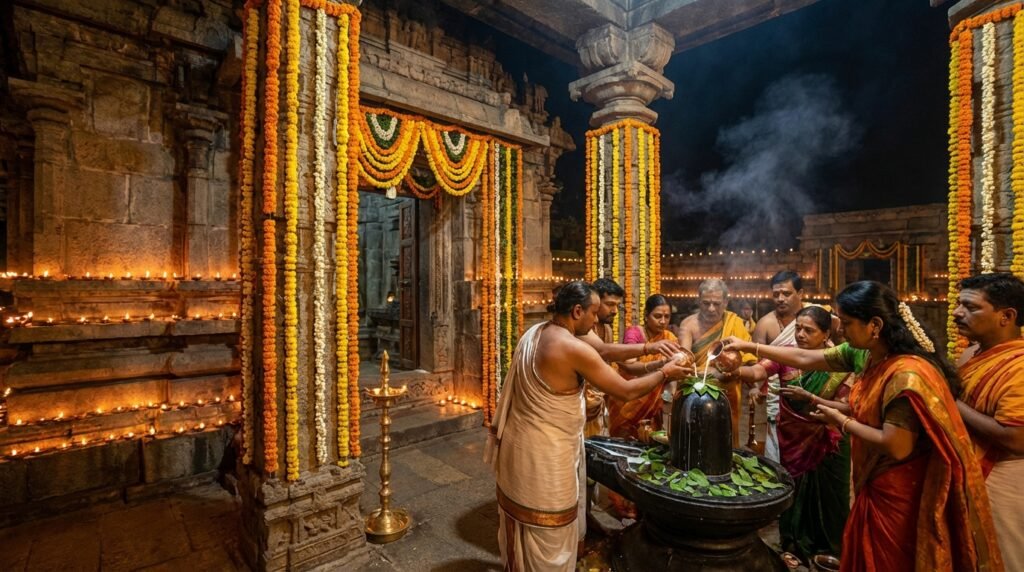
Maha Shivaratri, literally “the great night of Shiva,” is one of the most significant festivals in Hinduism. It marks the night when Lord Shiva performed the cosmic dance of creation, preservation, and destruction—the Tandava. According to legend, this is also the night when Shiva and Parvati were married.
Celebration Traditions:
- Night-long Vigil: Devotees stay awake all night, believing that staying awake on this night pleases Lord Shiva
- Fasting: Strict fast observed by millions, broken only the next morning
- Shivling Abhishekam: Ritual bathing of Shiva lingam with milk, honey, water, yogurt, ghee, and bel leaves
- Chanting: Continuous recitation of “Om Namah Shivaya” and Shiva mantras
- Offerings: Bel leaves (Shiva’s favorite), cannabis (bhang), and datura flowers offered
Best Places to Experience Maha Shivaratri:
1. Varanasi, Uttar Pradesh
The spiritual capital of India transforms during Shivaratri. The ghats along the Ganges become stages for elaborate ceremonies, and the Kashi Vishwanath Temple sees hundreds of thousands of devotees.
2. Haridwar & Rishikesh, Uttarakhand
The twin holy cities on the Ganges offer serene yet powerful Shivaratri celebrations. Ganga aarti combined with Shiva worship creates unforgettable spiritual experiences.
3. Ujjain, Madhya Pradesh
Home to Mahakaleshwar Jyotirlinga, one of the 12 sacred Shiva temples. The Bhasma Aarti (ash ritual) on Shivaratri is legendary.
4. Somnath, Gujarat
The first among twelve Jyotirlingas, Somnath temple on the Arabian Sea coast offers dramatic seaside Shivaratri celebrations.
TravelPaa’s Maha Shivaratri Package (3N/4D):
- Starting from: ₹28,999 per person
- Destinations: Varanasi or Haridwar-Rishikesh
- Inclusions: Accommodation, daily breakfast, Ganga aarti participation, temple darshan arrangements, guided temple tours, vegetarian meal arrangements for fasting day, travel insurance
- Special: Assistance with night vigil arrangements, VIP darshan passes where available
Travel Tips:
- Book hotels 2-3 months in advance—places fill quickly
- Dress modestly (full-length clothes for both genders)
- Carry warm clothes—February nights in North India are cold
- If fasting, inform hotel for appropriate meal arrangements
- Download offline maps—temple areas get crowded, phone networks slow down
2. Holi – The Festival of Colors
Dates:
- Holika Dahan: March 3, 2026 (Tuesday evening)
- Dhulandi (Color Play): March 4, 2026 (Wednesday)
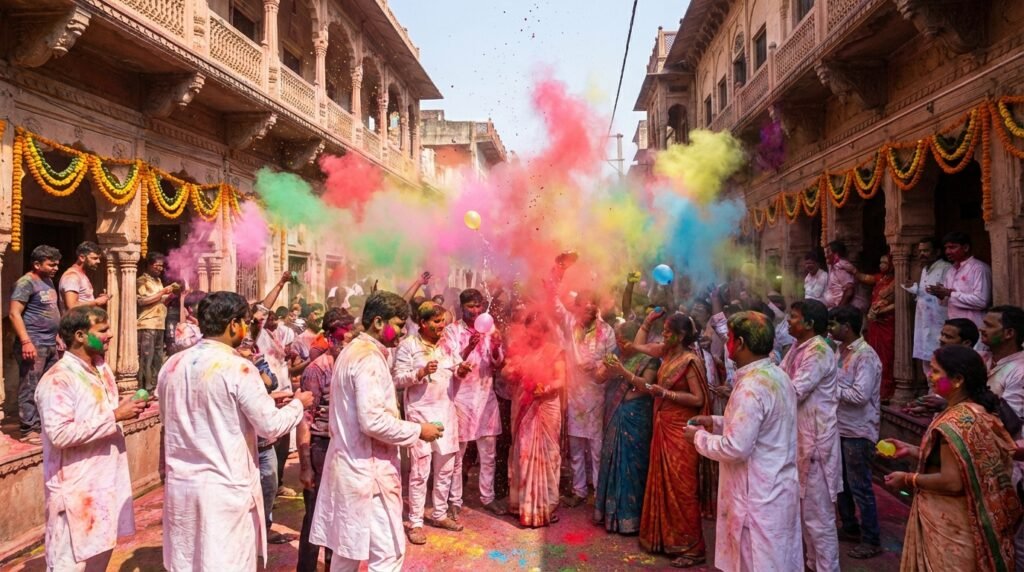
Holi is arguably India’s most internationally famous festival—a riotous celebration of spring, love, and the victory of good over evil. The festival has deep roots in Hindu mythology, commemorating the burning of demoness Holika and the immortal love of Radha-Krishna.
Celebration Traditions:
- Holika Dahan: The night before, communities gather around bonfires symbolizing the burning of evil
- Color Play: Next morning, people smear and throw colored powder (gulal) and colored water on each other
- Bhang: Traditional cannabis-infused drink consumed (optional, varies by region)
- Sweets: Gujiya, malpua, and other festive treats shared
- Music & Dance: Folk songs, drums, and energetic dancing in streets
Best Places to Experience Holi 2026:
1. Mathura & Vrindavan, Uttar Pradesh (The Holy Land)
The birthplace and playground of Lord Krishna, these twin towns offer the most authentic and spiritual Holi. Celebrations begin a week early with:
- Lathmar Holi (Barsana): Feb 26, 2026—Women playfully beat men with sticks while men defend with shields
- Phoolon wali Holi (Vrindavan): Flower Holi at Banke Bihari Temple
- Traditional Holi: March 4—Streets filled with devotional music, colors, and Krishna bhajans
2. Jaipur, Rajasthan (Royal Holi)
The Pink City hosts the famous Elephant Festival (now ethical version without actual elephants) and grand celebrations at City Palace. Hotels organize safe, tourist-friendly Holi events with organic colors.
3. Pushkar, Rajasthan
The sacred lake town offers a unique blend of spirituality and festivity. The lakeside setting provides stunning backdrops for colorful celebrations.
4. Delhi NCR
The capital offers diverse Holi experiences—from traditional neighborhood celebrations to hotel-organized organic Holi parties for visitors concerned about safety and hygiene.
5. Goa
Coastal Holi with beach parties, electronic music, and international crowd. More of a party atmosphere than traditional celebration.
TravelPaa’s Holi Festival Packages:
Golden Triangle with Holi (6N/7D):
- Starting from: ₹32,999 per person
- Itinerary: Delhi (1N) → Mathura-Vrindavan Holi (2N) → Agra (1N) → Jaipur Holi (2N) → Delhi
- Inclusions: Hotels, breakfast, Holi color kits, traditional lunch on Holi day, Taj Mahal visit, Jaipur palace tours, organic colors for safe play, post-Holi cleanup arrangements
- Special: Hindi/English guide explaining Holi traditions, photography assistance, traditional attire rental option
Vrindavan Spiritual Holi (4N/5D):
- Starting from: ₹22,999 per person
- Focus: Authentic Krishna-centered Holi in Vrindavan temples
- Inclusions: Accommodation near Banke Bihari Temple, all meals (pure vegetarian), temple Holi participation, Lathmar Holi excursion to Barsana, Yamuna aarti, Krishna temple tour
Travel Tips for Holi:
- Wear old white clothes you don’t mind ruining—colors don’t wash out easily
- Waterproof your phone or carry a cheap disposable camera
- Apply coconut oil to hair and body before playing—helps colors wash off
- Carry sunglasses to protect eyes from color powder
- Use only organic/herbal colors—chemical colors can cause skin reactions
- Stay hydrated—Holi involves hours of outdoor activity
- Be respectful—Not everyone participates; only play with willing participants
- Travel in groups—Especially for solo female travelers
- Book accommodation in advance—Holi weekend is peak season
Safety Considerations:
- TravelPaa arranges safe, controlled Holi celebrations for international visitors
- Hotels organize private Holi events with quality-controlled organic colors
- Female travelers receive special guidance for safe Holi experiences
- 24/7 support during Holi festivities
3. Ram Navami – Birth of Lord Rama
Date: March 26, 2026 (Thursday)
Navami Tithi: Begins March 26 morning, ends March 27 morning
Ram Navami celebrates the birth of Lord Rama, the seventh incarnation of Lord Vishnu and the hero of the epic Ramayana. Rama symbolizes dharma (righteousness), perfect kingship, and ideal human values. This festival marks the culmination of nine days of Chaitra Navratri.
Celebration Traditions:
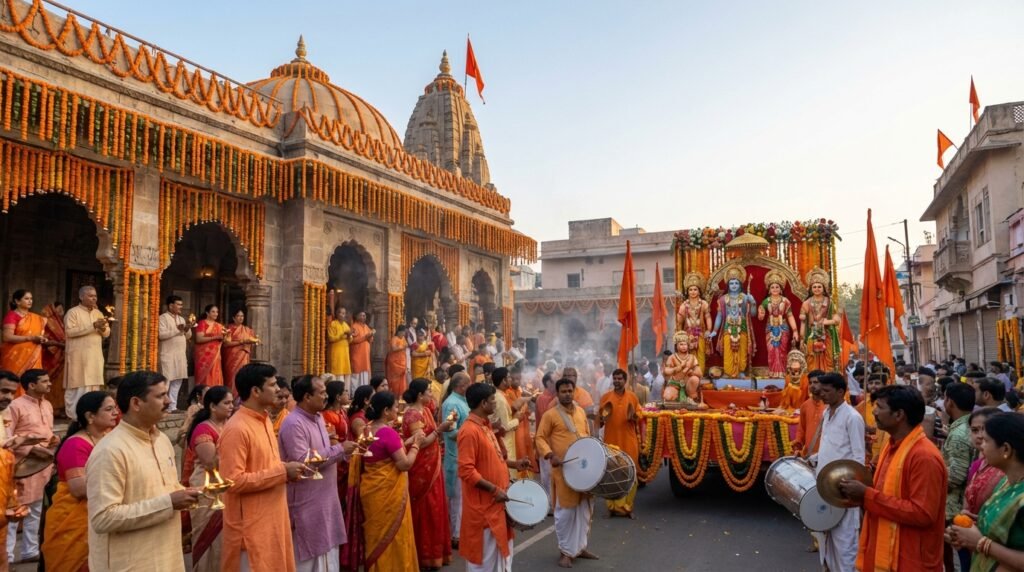
- Temple Processions: Grand processions with Ram Darbar (Rama, Sita, Lakshmana, Hanuman) idols through streets
- Ramayana Recitations: Continuous reading of Ramayana, especially Ramcharitmanas
- Bhajans & Kirtans: Devotional singing throughout the day
- Sunderkand Path: Special recitation of the Sunderkand chapter
- Charitable Acts: Donation of food, clothes, and assistance to the needy
- Fasting: Many devotees observe nirjala (waterless) or fruit fasts
Best Places to Experience Ram Navami:
1. Ayodhya, Uttar Pradesh
The birthplace of Lord Rama has become THE destination for Ram Navami since the Ram Mandir inauguration in 2024. The new temple will witness its third Ram Navami celebration in 2026 with unprecedented grandeur.
2. Rameswaram, Tamil Nadu
Where Rama worshipped Shiva after defeating Ravana. The Ramanathaswamy Temple sees massive celebrations connecting both Shiva and Rama worship.
3. Bhadrachalam, Telangana
The temple on the banks of Godavari River is strongly associated with Rama worship. Ten-day celebrations culminate on Ram Navami with grand processions.
4. Sitamarhi, Bihar
Believed to be the birthplace of Sita, Rama’s wife. The Janaki Temple hosts special celebrations.
5. Nashik, Maharashtra
One of the cities in Rama’s exile journey. The Kalaram Temple hosts vibrant celebrations.
TravelPaa’s Ram Navami Spiritual Tour (5N/6D):
- Starting from: ₹26,999 per person
- Destinations: Ayodhya (2N) → Varanasi (2N) → Allahabad (1N)
- Inclusions: Hotels, breakfast & dinner, Ram Mandir darshan with VIP access arrangements, Ramayana circuit tour (Ayodhya, Nandgaon, Janakpur extension optional), Ganga aarti in Varanasi, Hanuman Temple visits, Triveni Sangam boat ride
- Special: Expert guide on Ramayana history, audio Ramcharitmanas during travel
Travel Tips:
- Ayodhya gets extremely crowded—book 2+ months ahead for 2026
- Security is tight around Ram Mandir—carry ID proof and be prepared for checks
- Dress conservatively for temple visits
- Photography restrictions apply in some temple areas
- Plan for long queues—patience essential during festival day
- Vegetarian food only in these pilgrimage towns
4. Ugadi / Gudi Padwa – Regional New Years
Date: March 19, 2026 (Thursday)
Ugadi (Kannada and Telugu New Year) and Gudi Padwa (Marathi New Year) mark the beginning of the new year according to the Hindu lunar calendar. These festivals celebrate new beginnings, the arrival of spring, and the harvest season.
Celebration Traditions:
- Ugadi Pachadi: Special dish mixing six tastes (sweet, sour, salty, bitter, tangy, spicy) symbolizing life’s experiences
- Gudi Flag: Decorative flag raised outside homes in Maharashtra (silk cloth, neem leaves, sugar crystals on bamboo stick)
- New Clothes: Families wear new traditional attire
- House Decoration: Mango leaf torans (garlands) at doorways, rangoli designs
- Temple Visits: Seeking blessings for the year ahead
- Predictions: Panchanga Sravanam (listening to the year’s astrological predictions)
Best Places to Experience:
1. Mumbai & Pune, Maharashtra (Gudi Padwa)
Grand celebrations with street processions, traditional Maharashtrian cuisine, and festive markets.
2. Bangalore & Mysore, Karnataka (Ugadi)
City-wide celebrations with cultural programs, Ugadi Pachadi distribution, and traditional music.
3. Hyderabad, Telangana (Ugadi)
Old city areas showcase authentic Telugu traditions, special Ugadi prasadam distribution at temples.
TravelPaa’s South India New Year Tour (4N/5D):
- Starting from: ₹24,999 per person
- Destinations: Bangalore (2N) → Mysore (2N) or Mumbai (2N) → Pune (2N)
- Inclusions: Hotels, breakfast, Ugadi/Gudi Padwa celebration participation with local families, traditional feast, temple tours, cultural program tickets, cooking demonstration of festival dishes
5. Hanuman Jayanti – Birthday of Lord Hanuman
Date: April 1, 2026 (Wednesday)
Hanuman Jayanti celebrates the birth of Lord Hanuman, the devoted follower of Lord Rama and symbol of strength, devotion, and celibacy. Hanuman is worshipped for courage, protection from evil, and removal of obstacles.
Celebration Traditions:
- Hanuman Chalisa: 108 recitations of the 40-verse prayer
- Sunderkand Path: Reading of the Sunderkand chapter of Ramayana
- Fasting: Many devotees observe fast, breaking it only after evening puja
- Temple Processions: Grand processions with Hanuman idols
- Wrestling Competitions: As Hanuman symbolizes strength, akharas organize bouts
- Sindoor Offering: Applying vermillion to Hanuman idols
Best Places:
- Hampi, Karnataka: Ancient Hanuman Temple (Anjaneya Hill)
- Delhi: Hanuman Mandir at Connaught Place sees lakhs of devotees
- Varanasi: Sankat Mochan Hanuman Temple
- Allahabad: Hanuman Temple at Sangam
TravelPaa’s Hanuman Circuit (3N/4D):
- Starting from: ₹19,999 per person
- Destinations: Delhi → Varanasi → Allahabad
- Inclusions: Hotels, meals, Hanuman temple darshan, Chalisa recitation participation, cultural understanding sessions
6. Baisakhi – Punjabi Harvest & Sikh New Year
Date: April 14, 2026 (Tuesday)
Baisakhi (also Vaisakhi) holds special significance for Sikhs as it marks the formation of the Khalsa in 1699 by Guru Gobind Singh. It’s also the harvest festival of Punjab, celebrating the Rabi crop.
Celebration Traditions:
- Golden Temple: Grand celebrations with kirtan, langar, and Nagar Kirtan (procession)
- Bhangra & Gidda: Traditional Punjabi folk dances
- Processions: Panj Pyare (Five Beloved Ones) lead processions
- Fairs: Massive fairs in Punjab villages with wrestling, music, food
- Harvesting: Farmers thank God for bountiful harvest
Best Place:
Amritsar, Punjab – The Golden Temple becomes the epicenter of Baisakhi celebrations. TravelPaa offers 2N/3D Amritsar Baisakhi packages starting ₹15,999 including Golden Temple visit, Wagah Border ceremony, village fair participation.
Top 10 Indian Festivals: Complete Guide
Beyond the February-April window, India celebrates hundreds of festivals year-round. Here are the Top 10 Indian Festivals that define the nation’s cultural and spiritual identity:
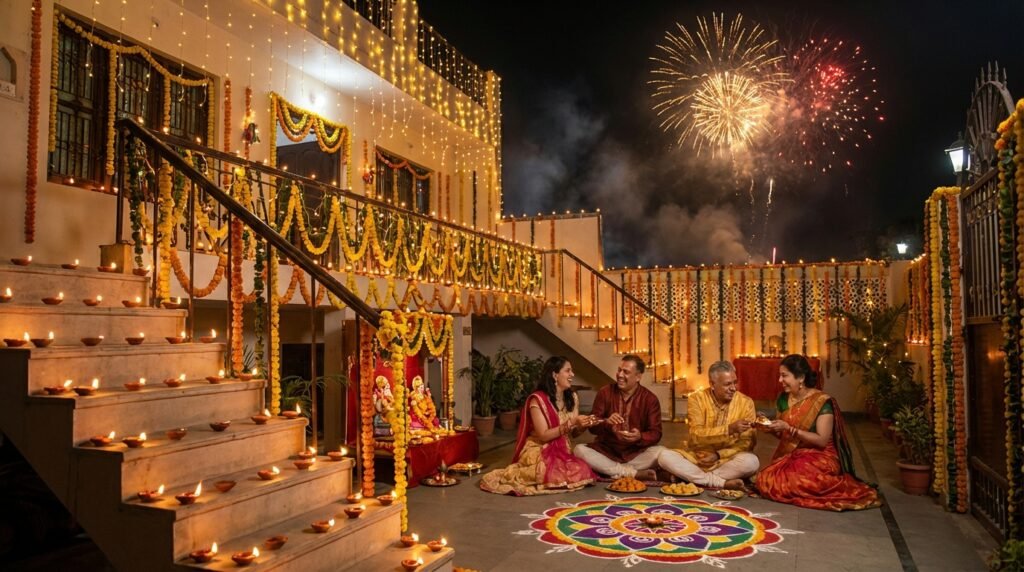
1. Diwali – Festival of Lights
When: October-November (5-day festival)
2026 Date: October 18-22, 2026
Main Day: October 20, 2026 (Tuesday)
Significance:
Diwali (Deepavali) is India’s biggest and most celebrated festival, marking the victory of light over darkness and good over evil. It commemorates Lord Rama’s return to Ayodhya after 14 years of exile and defeating Ravana. For businesses, it marks the New Year.
Celebrations:
- Lighting diyas: Millions of oil lamps illuminating homes, temples, streets
- Rangoli: Colorful floor designs at entrances
- Lakshmi Puja: Worship of Goddess of Wealth for prosperity
- Firecrackers: Bursting crackers (though increasingly eco-conscious alternatives)
- Sweets: Exchange of mithai boxes with family and friends
- New Clothes: Families wear new traditional attire
- Gambling: Traditional card games and gambling (considered auspicious)
Best Places:
- Varanasi: Lakhs of diyas lit along Ganges ghats
- Jaipur: Palaces and forts illuminated magnificently
- Amritsar: Golden Temple covered in lights and fireworks
- Goa: Unique effigies of demon Narakasura burned
- Kolkata: Kali Puja coincides with Diwali night
TravelPaa’s Diwali Tour Packages starting ₹28,999 include Varanasi Ganga aarti, Jaipur palace tours, Diwali celebration participation, and traditional attire for photos.
2. Holi – Festival of Colors
Covered in detail above
2026 Date: March 4, 2026
India’s most colorful festival celebrating spring, love, and the victory of good over evil.
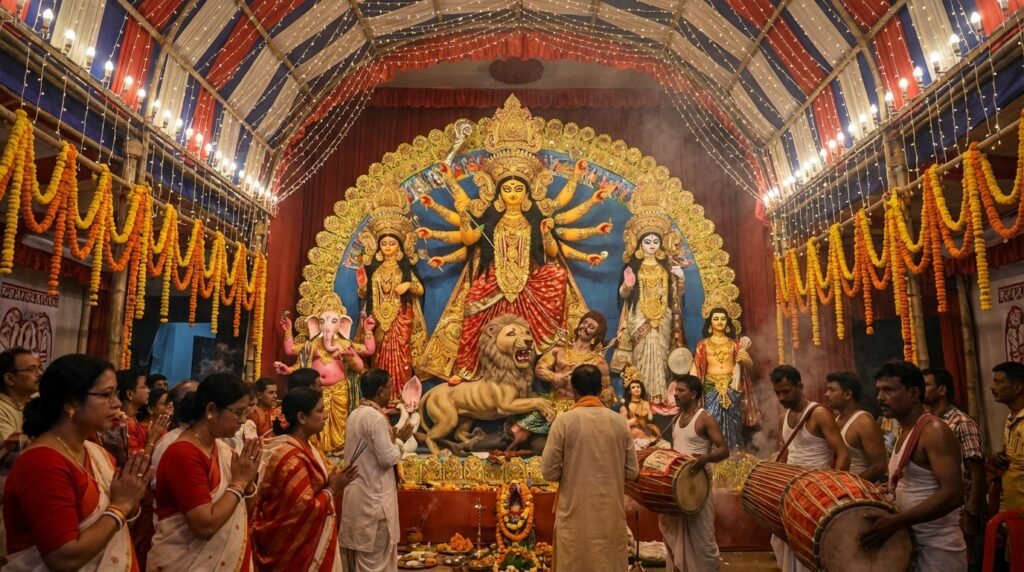
3. Durga Puja – Worship of Goddess Durga
When: September-October (10-day festival)
2026 Date: October 11-19, 2026
Main Days: Saptami (Oct 17), Ashtami (Oct 18), Navami (Oct 19), Dashami (Oct 20)
Significance:
Durga Puja celebrates Goddess Durga’s victory over buffalo demon Mahishasura, symbolizing triumph of good over evil. While celebrated across India, it’s Bengal’s biggest festival—comparable to Christmas in Western countries.
Celebrations:
- Elaborate Pandals: Artistic temporary structures housing Durga idols, often with themes (Egyptian, Venice, etc.)
- Idol Worship: Beautiful clay idols of Durga with her children (Lakshmi, Saraswati, Ganesha, Kartikeya)
- Dhak Drums: Traditional drums creating festival atmosphere
- Cultural Programs: Dance, drama, music performances
- Food: Massive feasts with Bengali delicacies
- Sindoor Khela: Women smear each other with vermillion on last day
- Immersion: Grand processions taking idols to rivers for immersion
Best Places:
- Kolkata, West Bengal: THE destination—thousands of pandals, artistic masterpieces
- Delhi: Bengali communities organize grand pujas
- Mumbai: North Bombay has significant Bengali population with beautiful pandals
- Varanasi: Spiritual city’s unique take on Durga Puja
TravelPaa’s Durga Puja Kolkata Special (4N/5D):
- Starting from: ₹24,999 per person
- Inclusions: Heritage hotel in Kolkata, pandal hopping with expert guide, Dhunuchi dance participation, Bengali feast arrangements, Sindoor Khela experience, immersion procession viewing
- Travel Tip: Book 3-4 months ahead—Durga Puja is peak season for Kolkata
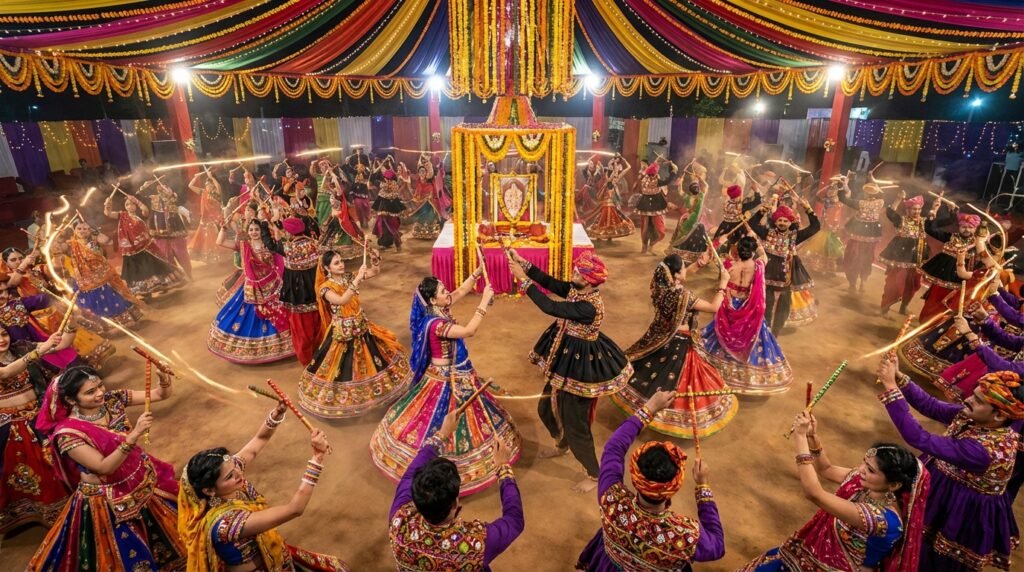
4. Navratri – Nine Nights of Goddess Worship
When: September-October (9 nights, 10 days)
2026 Date: October 11-19, 2026
Significance:
Navratri (meaning “nine nights”) celebrates the divine feminine energy through worship of Goddess Durga in her nine forms. While primarily Hindu, its cultural impact transcends religion.
Regional Variations:
Gujarat – Garba & Dandiya Raas:
- Most famous Navratri celebrations
- Energetic circular dance (Garba) and stick dance (Dandiya)
- Colorful traditional chaniya choli (women) and kediyu (men)
- Massive public gatherings, some with international DJs
- Best places: Ahmedabad, Vadodara, Surat
North India – Ramlila & Dussehra:
- Focus on Ramayana enactments
- Culminates in Dussehra with burning of Ravana effigies
- Best places: Delhi, Varanasi, Lucknow
South India – Golu Dolls:
- Display of dolls depicting gods, goddesses, and daily life
- Tamil Nadu and Karnataka tradition
- Temple visits with special prayers
Bengal – Durga Puja:
- Last five days of Navratri are Durga Puja (covered above)
TravelPaa’s Navratri Gujarat Experience (5N/6D):
- Starting from: ₹26,999 per person
- Inclusions: Hotels in Ahmedabad/Vadodara, traditional attire rental, Garba/Dandiya venue passes (premium venues), dance lessons, regional cuisine experiences
- Special: Professional photographer at one Garba night
5. Ganesh Chaturthi – Birthday of Lord Ganesha
When: August-September (10-11 days)
2026 Date: September 7-17, 2026
Main Day: September 7, 2026
Significance:
Ganesh Chaturthi celebrates the birth of Lord Ganesha, the elephant-headed god of wisdom, prosperity, and remover of obstacles. The festival gained prominence during India’s freedom struggle as a tool for social gathering.
Celebrations:
- Idol Installation: Clay Ganesha idols installed in homes and public pandals
- Prayers & Offerings: Daily puja with modak (Ganesha’s favorite sweet), flowers, coconuts
- Processions: Grand street processions with singing and dancing
- Immersion: Idols immersed in water bodies after 1.5, 3, 5, 7, or 11 days
- Community Participation: Entire neighborhoods celebrate together
Best Places:
- Mumbai, Maharashtra: THE epicenter—Lalbaugcha Raja and other famous pandals draw millions
- Pune, Maharashtra: Dagdusheth Halwai Ganpati and thousands of local Ganpatis
- Hyderabad, Telangana: Khairatabad Ganesh is one of tallest installations
- Goa: Unique Konkani traditions blend with Goan culture
TravelPaa’s Ganesh Chaturthi Mumbai Tour (3N/4D):
- Starting from: ₹22,999 per person
- Inclusions: Mumbai hotel, famous pandal darshan with queue management, immersion procession viewing from safe vantage point, Mumbai sightseeing, local guide explaining traditions
6. Eid-ul-Fitr – Festival of Breaking the Fast
When: End of Ramadan (Islamic month of fasting)
2026 Date: March 21, 2026 (Saturday) – Tentative, depends on moon sighting
Significance:
Eid-ul-Fitr marks the end of Ramadan, the Islamic holy month of fasting. It’s a celebration of spiritual discipline, community, and gratitude. India’s 200+ million Muslims make this one of the country’s major festivals.
Celebrations:
- Eid Prayers: Special morning prayers at mosques and Eidgahs
- Zakat: Charitable giving to the poor
- Feasting: Special dishes like seviyan (vermicelli), biryani, kebabs, haleem
- New Clothes: Everyone wears new attire
- Visiting: Meeting family, friends, and neighbors
- Gifts: “Eidi” (gifts) given especially to children
Best Places:
- Delhi: Jama Masjid sees massive gatherings; Old Delhi comes alive
- Lucknow, Uttar Pradesh: Historic Awadhi Muslim culture, grand celebrations
- Hyderabad, Telangana: Charminar area, famous for biryani feasts
- Mumbai: Minara Masjid, Mohammed Ali Road becomes food heaven
- Kerala: Unique Malabar Muslim traditions
Cultural Tip: Non-Muslims are welcome to participate in celebrations, especially feasting. Greeting “Eid Mubarak” is appreciated.
7. Onam – Kerala’s Harvest Festival
When: August-September (10 days)
2026 Date: August 27 – September 5, 2026
Main Day (Thiruvonam): September 5, 2026
Significance:
Onam celebrates the homecoming of legendary King Mahabali and marks Kerala’s harvest festival. Despite Hindu mythological origins, it’s celebrated across all religions in Kerala as the state festival.
Celebrations:
- Pookalam: Intricate flower rangoli designs
- Onasadya: Elaborate vegetarian feast on banana leaf with 26+ dishes
- Vallam Kali: Snake boat races on Kerala’s backwaters
- Kathakali: Traditional dance-drama performances
- Kaikottikali: Women’s group dance
- Pulikali: Tiger dance with men painted as tigers
Best Places:
- Kochi (Cochin): Cultural hub with grand celebrations
- Thrissur: Temple festivals, cultural programs
- Alleppey: Famous for snake boat races
- Trivandrum: State capital with official celebrations
TravelPaa’s Kerala Onam Package (6N/7D):
- Starting from: ₹36,999 per person
- Inclusions: Hotels in Kochi, Alleppey, Thekkady, Onasadya participation, boat race viewing, houseboat stay, Kathakali performance, backwater cruise, cultural understanding sessions
8. Raksha Bandhan – Brother-Sister Bond
When: July-August
2026 Date: August 12, 2026 (Wednesday)
Significance:
Raksha Bandhan celebrates the bond between brothers and sisters. Sisters tie a sacred thread (rakhi) on brothers’ wrists, and brothers pledge to protect their sisters.
Celebrations:
- Rakhi Tying: Elaborate or simple threads tied with prayers
- Gifts: Brothers give gifts to sisters
- Sweets: Traditional mithai sharing
- Family Gatherings: Extended family meets
- Modern Twist: Sisters also send rakhis to female friends, and women in armed forces receive rakhis
Cultural Note: This is more of a private family celebration, but markets selling rakhis and sweets create festive atmosphere in August.
9. Krishna Janmashtami – Birth of Lord Krishna
When: August-September
2026 Date: August 25-26, 2026
Midnight Birth: August 25 night into August 26
Significance:
Janmashtami celebrates the birth of Lord Krishna, the eighth avatar of Lord Vishnu, born at midnight in a prison in Mathura. Krishna represents divine love, playfulness, and philosophical depth (Bhagavad Gita).
Celebrations:
- Midnight Celebrations: Birth moment marked at 12 AM with temple bells, conches
- Dahi Handi: Human pyramids formed to break pot of curd hung high (Mumbai specialty)
- Jhulanotsav: Swinging of Krishna idols
- Fasting: Devotees fast until midnight
- Raslila: Dance-dramas depicting Krishna’s life
- Devotional Singing: Bhajans and kirtans throughout the day
Best Places:
- Mathura-Vrindavan, UP: Krishna’s birthplace and childhood home—most authentic
- Dwarka, Gujarat: Krishna’s kingdom
- Puri, Odisha: Jagannath Temple (Krishna form)
- Mumbai, Maharashtra: Dahi Handi competitions with cash prizes
- ISKCON Temples: Worldwide, grand celebrations
TravelPaa’s Janmashtami Special (4N/5D):
- Starting from: ₹23,999 per person
- Destinations: Mathura-Vrindavan
- Inclusions: Hotels near temples, midnight celebration participation, temple darshan, Yamuna aarti, Raslila viewing, Brajbhoomi tour
10. Pongal – Tamil Harvest Festival
When: January (4 days)
2026 Date: January 14-17, 2026
Significance:
Pongal is Tamil Nadu’s harvest festival, thanking Sun God for good harvest. The name comes from the Tamil word meaning “to boil over,” referring to the ritual of boiling rice in milk outdoors.
Celebrations:
- Bhogi Pongal (Day 1): Discarding old items, bonfire
- Surya Pongal (Day 2): Main day, cooking Pongal rice dish outdoors in clay pot
- Mattu Pongal (Day 3): Honoring cattle, decorating cows and bulls
- Kaanum Pongal (Day 4): Family outings, visiting relatives
- Kolam: Intricate rice flour designs decorating doorsteps
- Jallikattu: Traditional bull-taming sport in some areas
Best Places:
- Rural Tamil Nadu: Villages showcase authentic traditions
- Madurai: City celebrates grandly with Jallikattu in surroundings
- Chennai: Urban celebrations blend tradition with modernity
- Thanjavur: Historic temple town celebrations
Regional Festival Highlights: February to April
Northeast India
Losar (Tibetan New Year) – February 2026 in Arunachal Pradesh, Sikkim
Chapchar Kut – March 2026 in Mizoram (spring festival with bamboo dances)
Bihu (Rongali) – April 14, 2026 in Assam (New Year, harvest festival)
South India
Panguni Uthiram – March-April in Tamil Nadu (celestial wedding of gods)
Ugadi – March 19, 2026 across Karnataka, Andhra Pradesh, Telangana
Vishu – April 14, 2026 in Kerala (Malayali New Year)
Central India
Bhagoria – March in Madhya Pradesh tribal regions (pre-marriage festival)
Khajuraho Dance Festival – February-March in Madhya Pradesh (classical dances against temple backdrop)
Travel Planning Guide: Festival Tourism in India
When to Book
Advance Booking Timelines:
- Major Festivals (Holi, Diwali, Durga Puja): 3-4 months ahead minimum
- Regional Festivals: 2-3 months ahead
- Temple Towns (Varanasi, Ayodhya): 2 months ahead for regular, 4+ months for festivals
- Last-Minute (1-4 weeks): Limited options, expect 30-50% price premium
Why early booking matters:
- Hotels in festival destinations fill up fast
- Flight/train prices surge closer to dates
- Better choice of accommodation locations
- Time for visa processing if international visitors
- TravelPaa can customize better with advance notice
What to Pack for Festival Travel
Clothing:
- Traditional Attire: While not mandatory, wearing ethnic clothes enhances experience (can be purchased or rented)
- Comfortable Walking Shoes: Festivals involve lots of walking, often in crowds
- Weather-Appropriate: Feb-April transitions winter to summer (layers essential)
- Old Clothes for Holi: Whites that you won’t mind ruining
- Modest Clothes: Full-length for temple visits
Essentials:
- Portable Power Bank: Long days, heavy phone usage for photos
- Reusable Water Bottle: Staying hydrated crucial
- Small Backpack: For day trips, carrying offerings, water, snacks
- First Aid Kit: Basic medicines, band-aids, antiseptic
- Sunscreen & Sunglasses: Especially March-April
- Cash: Many festival areas, temples, small vendors don’t accept cards
For International Visitors:
- Adapters: Indian plugs are type C, D, M
- Photocopies of Documents: Passport, visa, insurance
- Travel Insurance: Mandatory with TravelPaa packages
- Offline Maps: Download Google Maps offline
- Translation App: Google Translate with offline language pack
Health & Safety
Food Safety:
- Street food is part of festival experience but choose busy stalls (high turnover = fresh)
- Drink only bottled/filtered water
- Avoid raw salads in small towns
- TravelPaa packages include vetted restaurant recommendations
Crowd Management:
- Major festivals draw enormous crowds—stay alert
- Keep valuables in front pockets or hidden pouches
- Travel in groups, especially women travelers
- Keep emergency contacts saved offline
Health Precautions:
- Carry prescribed medicines plus extras
- Know location of nearest hospital (TravelPaa provides emergency support)
- Get travel insurance covering medical emergencies
- COVID/flu mask if you’re sensitive to crowds
Women Travelers:
- India is generally safe but crowded festivals require extra vigilance
- Dress modestly in religious sites
- Use TravelPaa’s women-only group tours if solo
- 24/7 emergency support from TravelPaa
Photography Tips
Best Festival Photo Opportunities:
- Holi: Early morning before crowds build, golden hour colors
- Shivaratri: Night photography of lit temples, Ganga aarti flames
- Durga Puja: Artistic pandals best photographed early morning (less crowd)
- Processions: Position yourself along route early
Etiquette:
- Ask permission before photographing people, especially women and children
- Respect temple rules: Many prohibit photography inside sanctums
- Drones: Mostly illegal/restricted, especially near temples, security areas
- Be sensitive: Don’t photograph rituals unless invited/permitted
Gear Recommendations:
- Phone cameras now excellent, but bring backup battery/power bank
- Weatherproof your gear during Holi (ziplock bags work)
- Fast lenses for low-light temple/night photography (if serious photographer)
Cultural Etiquette
Temple Visit Protocol:
- Remove shoes before entering (designated shoe stands available, small tip)
- Dress modestly: Shoulders and knees covered minimum
- No leather items in some temples
- Follow queue discipline: Pushiness unfortunately common, but maintain decorum
- Don’t touch idols unless specifically part of ritual
- Photography: Ask priest if unsure
- Prasad: Accept with right hand, considered blessing
Festival Participation:
- You’re welcome to join most Hindu festivals even as non-Hindu
- Respect religious sentiments: Don’t mock or treat as purely entertainment
- Follow local guidance: TravelPaa guides will advise on do’s/don’ts
- Donations/offerings: Optional but appreciated (₹10-100 range appropriate)
Holi-Specific:
- Only play with willing participants: “No” means no
- Avoid alcohol: Bhang (cannabis drink) is traditional but strong; exercise caution
- Respect boundaries: Some areas reserved for families only
- Organic colors only: Chemical colors harmful
Budget Planning
Festival Season Cost Impact:
| Expense Category | Regular Season | Festival Season | % Increase |
| Accommodation | ₹2,000-₹5,000/night | ₹4,000-₹10,000/night | 100%+ |
| Flights (Domestic) | ₹3,000-₹8,000 | ₹6,000-₹15,000 | 80-100% |
| Trains | Standard fare | Tatkal rates apply | 20-50% |
| Local Transport | ₹500-₹1,000/day | ₹800-₹1,500/day | 50% |
| Food | ₹500-₹1,500/day | Same (stable) | Minimal |
Sample Budget (Per Person) – Holi in Mathura-Vrindavan (3N/4D):
Budget Travel:
- Accommodation: ₹2,500/night × 3 = ₹7,500
- Meals: ₹800/day × 4 = ₹3,200
- Transport (from Delhi): ₹500 return
- Local sightseeing: ₹1,000
- Colors, offerings: ₹500
- Total: ₹12,700 + Delhi to/from
Mid-Range with TravelPaa:
- Package: ₹22,999 (includes accommodation, breakfast, colors, guide, transport)
- Additional meals: ₹1,500
- Shopping, snacks: ₹1,000
- Total: ₹25,500
Luxury:
- High-end heritage hotel: ₹25,000
- All meals at premium venues: ₹6,000
- Private vehicle and guide: ₹8,000
- Total: ₹39,000+
Money-Saving Tips:
- Book packages vs. individual components (30-40% savings)
- Travel in groups for group discounts
- Book 3+ months ahead for early bird offers
- Choose shoulder date (day after main festival) for lower prices
TravelPaa’s Festival Packages 2026
Why Choose TravelPaa for Festival Tours?
As the best travel agency in Delhi with 44+ years of experience, TravelPaa specializes in cultural and religious tourism. Our festival packages offer:
✅ Authentic Experiences
- Not just tourist observation—actual participation in rituals and celebrations
- Local experts who understand deep cultural context
- Access to celebration sites tourists often miss
✅ Hassle-Free Planning
- We handle accommodation, transport, bookings, queues
- You enjoy the festival; we manage logistics
- 24/7 support during festival days
✅ Safety & Comfort
- Vetted accommodations near festival sites
- Crowd management assistance
- Emergency medical support arrangements
- Women-only groups available
✅ Cultural Context
- Expert guides explain significance, mythology, traditions
- Not just seeing but understanding festivals
- Respectful, sensitive approach to religious celebrations
✅ Value for Money
- Package prices 30-40% lower than booking separately
- No hidden costs
- Group discounts available
Top Festival Packages 2026
1. Maha Shivaratri Spiritual Journey (3N/4D)
- Destinations: Varanasi or Haridwar-Rishikesh
- Starting from: ₹18,999 per person
- Dates: Feb 13-16, 2026
- Highlights: Night vigil participation, Ganga aarti, temple darshan, spiritual guidance
2. Holi Festival Golden Triangle (6N/7D)
- Destinations: Delhi → Mathura-Vrindavan → Agra → Jaipur
- Starting from: ₹32,999 per person
- Dates: Mar 1-7, 2026
- Highlights: Lathmar Holi, Vrindavan temple Holi, Royal Jaipur Holi, Taj Mahal visit, organic colors, traditional attire assistance
3. Ram Navami Ramayana Circuit (5N/6D)
- Destinations: Ayodhya → Varanasi → Allahabad
- Starting from: ₹26,999 per person
- Dates: Mar 24-29, 2026
- Highlights: Ram Mandir darshan, Ramayana sites, Hanuman temples, festival processions
4. South India Festival Combo (7N/8D)
- Destinations: Bangalore → Mysore → Hampi → Badami
- Starting from: ₹34,999 per person
- Dates: Flexible around Ugadi (March 19)
- Highlights: Ugadi celebration, temple architecture, Karnataka heritage
5. Multi-Festival India Experience (14N/15D)
- Destinations: North & South India covering 2-3 festivals
- Starting from: ₹68,999 per person
- Custom Dates: Based on your festival preferences
- Highlights: Experience multiple regional celebrations, comprehensive India immersion
Customization Options
Every TravelPaa package is customizable:
- Extend stays in favorite destinations
- Add/remove cities based on interests
- Upgrade accommodations (3-star to 5-star)
- Private vehicles vs. shared transport
- Photography focus packages
- Family-friendly modifications
- Solo traveler and women-only groups
Special Offers 2026
Early Bird Festival Offers:
- Book by January 31, 2026: 15% off all festival packages
- Book by February 28, 2026: 10% off
- Group discounts (4+ people): additional 10% off
Holi Special:
- Book Holi package by February 10: Free traditional attire for Holi day
- Professional Holi photoshoot included (2-hour session)
Quote Code: FESTIVAL2026
Use when contacting TravelPaa for instant recognition and offers.
Contact TravelPaa: Your Festival Journey Starts Here
Book Your Festival Experience
Ready to immerse yourself in India’s most colorful, spiritual, and joyous celebrations? Let TravelPaa craft your perfect festival journey with our expertise, safety measures, and authentic local connections.
📧 Email: holidays@travelpaa.com
📞 Phone/WhatsApp: +91-98999-21559
🌐 Website: www.travelpaa.com
🏢 Delhi Office: 13, 3rd Floor, Vaishali Enclave, Pitampura, Delhi, 110034
Office Hours: Monday-Saturday, 10:00 AM – 7:30 PM IST
Festival Helpline (24/7 during festival season): +91-98999-21559
How to Book Your Festival Tour:
Step 1: Festival Selection & Consultation
Contact us via phone, email, or website. Share your preferred festivals, dates, group size, and budget. Free 30-minute consultation with our festival travel specialists.
Step 2: Customized Itinerary
Within 24-48 hours, receive detailed festival itinerary including dates, places, accommodations, experiences, transparent pricing breakdown, and inclusions/exclusions.
Step 3: Booking Confirmation
Review and confirm itinerary. Pay 25-30% booking amount to secure dates and hotels (critical during festival season). Complete documentation support begins.
Step 4: Pre-Departure Preparation
2-3 weeks before departure: detailed briefing on festival traditions, cultural etiquette, what to wear, packing lists, health precautions, emergency contacts. For international visitors: visa assistance, travel insurance processing, currency exchange guidance.
Step 5: Festival Experience
24/7 support throughout your journey. On-ground assistance during festivals. Guides help navigate crowds, rituals, and cultural nuances. Emergency backup plans ready.
Step 6: Post-Trip Support
Feedback collection. Support for any follow-up needs. Digital photo album of your festival journey (select packages). Loyalty benefits for future travels with TravelPaa.
Special Quote Code for Blog Readers
Use quote code FESTIVAL2026 when contacting TravelPaa to receive:
- Priority consultation scheduling
- Instant recognition of early bird offers (15% off before Jan 31, 2026)
- Complimentary festival cultural guidebook (₹1,500 value)
- Special consideration for customization requests
- Festival emergency support SIM card
Valid for bookings made before March 1, 2026, for travel February-April 2026.
Start Your Festival Journey Today
India’s festivals are not mere dates on a calendar—they’re living, breathing expressions of a civilization’s soul, opportunities to witness humanity at its most colorful, spiritual, and joyous. Whether it’s the spiritual intensity of Maha Shivaratri’s midnight vigil, the exuberant color clouds of Holi, the devotional fervor of Ram Navami, or regional harvest celebrations, each festival offers a window into India’s incredible cultural tapestry.
The February to April 2026 period presents a unique opportunity to experience this magic during India’s most pleasant weather, when spring transforms the landscape and festivals transform the spirit.
TravelPaa has helped over 50,000 travelers—from curious first-timers to spiritual seekers—create unforgettable festival memories. Let us be your guide to India’s soul.
Contact TravelPaa now and take the first step toward your Indian festival adventure. The colors of Holi, the lights of aarti, the sounds of temple bells, and the warmth of Indian hospitality are waiting for you.
Your festival journey begins here. 🎨🪔🙏✨
Disclaimer
All festival dates are based on current 2026 Hindu Panchang predictions and may be subject to final confirmation based on lunar calendar calculations and moon sightings (for Islamic festivals). TravelPaa will confirm exact dates and timings closer to festival time. Package prices are approximate and subject to change based on season, availability, accommodation choices, and group size. Actual prices will be confirmed at the time of booking. Flight and train costs depend on booking class and advance purchase. All itineraries are customizable based on your preferences. Festival celebrations can involve large crowds—follow safety guidelines provided by TravelPaa. Travel insurance is mandatory and included in our packages. Cultural sensitivity and respect for religious sentiments are expected from all travelers. Please check current travel advisories and health requirements before booking. Some festivals involve outdoor activities, colors, or fasting—participate according to your comfort level and health conditions. Copyright © 2026 TravelPaa Pvt. Ltd. All rights reserved.
Experience India’s Soul Through Its Festivals – Let TravelPaa Be Your Guide! 🌈